
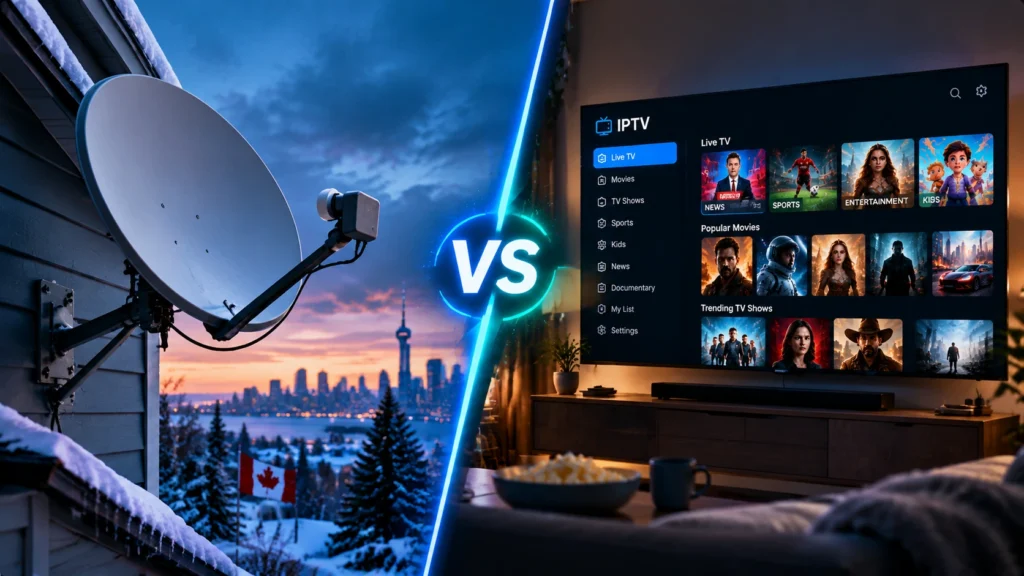
Thinking about dropping the dish? The IPTV vs satellite TV decision comes down to how you get your channels – over the internet, or beamed from space to a dish on your roof. Both deliver live television, but they differ sharply on cost, channel choice, weather reliability, and setup. This guide compares them honestly for Canadian homes in 2026, including how an IPTV service stacks up against Bell Satellite TV and Shaw Direct.
How Each One Works
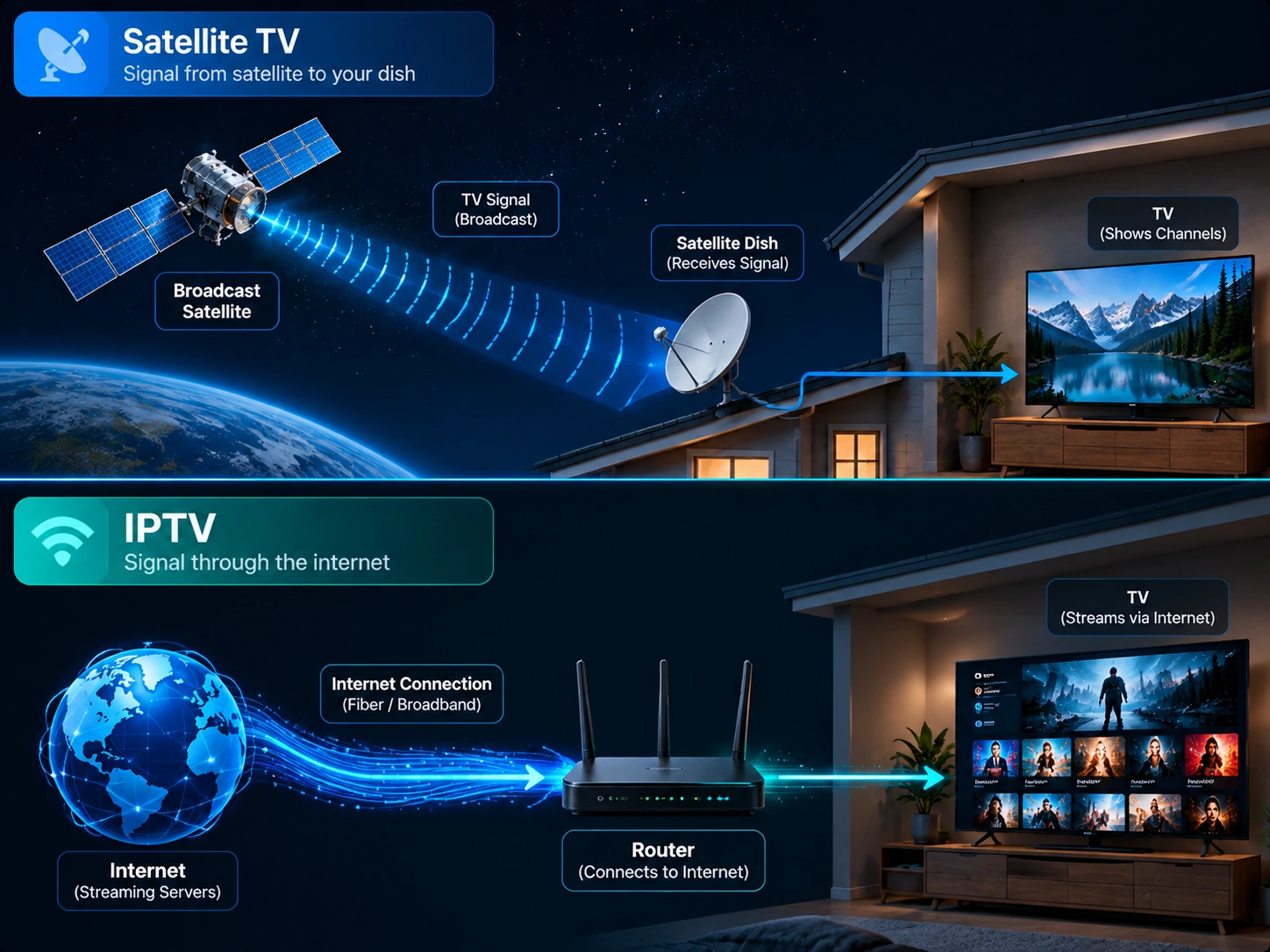
Satellite TV sends channels from a broadcast satellite to a dish mounted on your home. A receiver box decodes the signal for each TV. It does not need the internet to deliver live channels, which is its defining advantage.
IPTV delivers the same kind of live channels – plus large on-demand libraries – over your home internet connection to an app on your TV, box, phone, or computer. No dish, no coax to every room, and far more flexibility. New to it? Start with how IPTV works.
IPTV vs Satellite TV: Side-by-Side
| Feature | IPTV | Satellite TV |
|---|---|---|
| Delivery | Over the internet | Dish and receiver |
| Installation | Download an app – minutes | Professional dish install |
| Weather reliability | Unaffected by rain or snow | Can drop out in heavy rain or snow |
| Channels | Huge, incl. international | Large, mostly domestic packages |
| On-demand library | Usually bundled | Limited |
| Contracts | Flexible, often month-to-month | Often multi-year |
| Extra TVs | Add a device/app | Extra receiver per TV |
| Internet required | Yes | No (for live TV) |
| Typical cost | Lower, one flat fee | Higher, plus equipment |
Where Satellite TV Still Wins
Satellite has one big, genuine advantage: it does not depend on the internet. If you live somewhere rural with slow or unreliable broadband, a dish may still be the most dependable way to get live TV. Satellite providers are also long-established, with professional installation and support if you prefer a hands-off setup.
Where IPTV Pulls Ahead
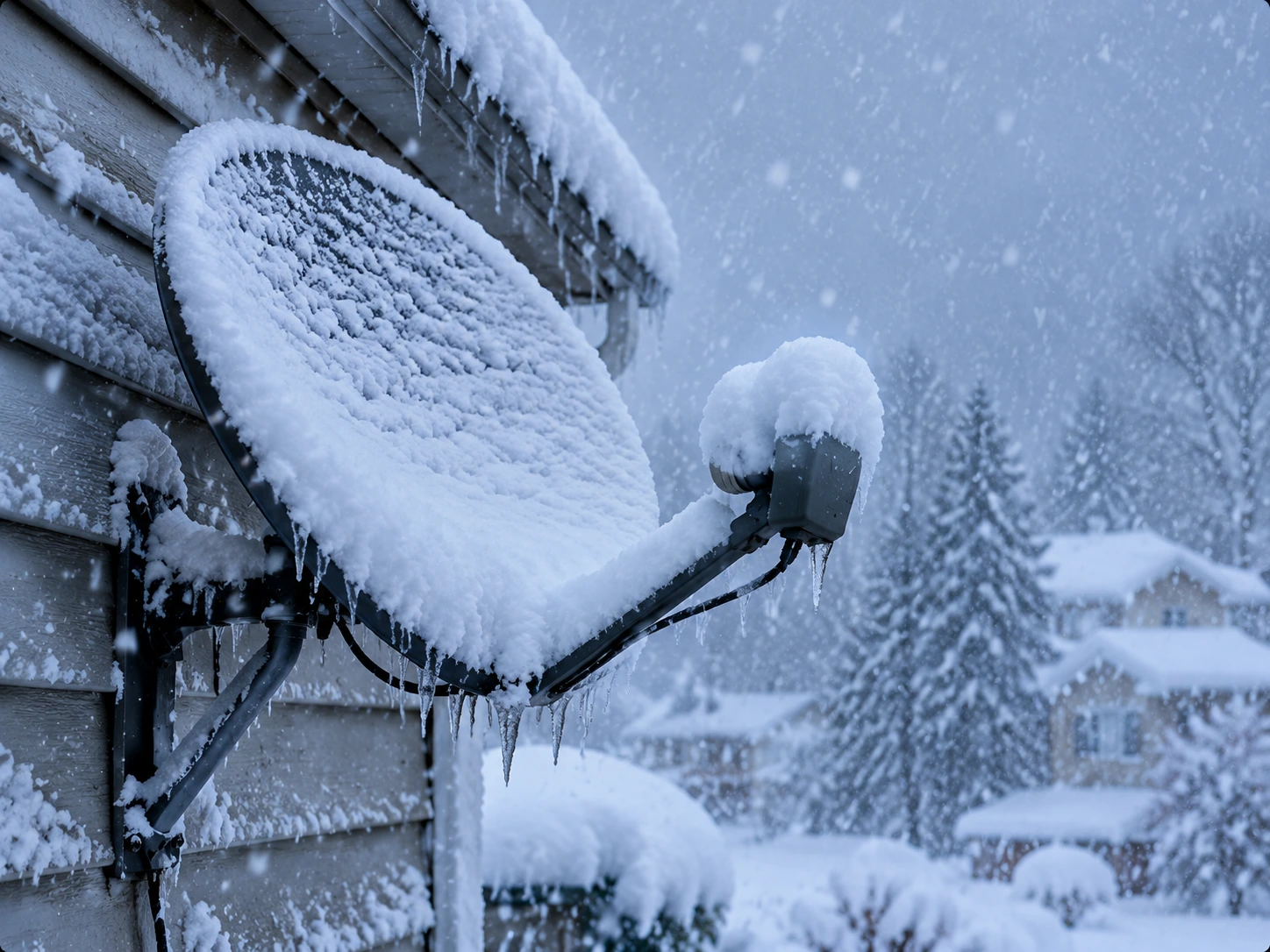
- No weather fade. Canadian winters are hard on dishes – heavy snow and rain can cause satellite signal loss, while IPTV streams straight through a storm as long as your internet is up.
- More channels and international content. IPTV typically offers far more channels, including the hard-to-find international and sports options satellite packages lack.
- Lower cost and no long contract. One flat subscription usually beats satellite pricing, with no multi-year lock-in or per-receiver fees.
- Watch anywhere, on any device. Your subscription follows you to any TV, phone, or tablet – not just the rooms wired to a dish.
- Bundled on-demand. Most IPTV plans include a movie and series library satellite cannot match.
Cost Comparison
Satellite TV in Canada usually means a monthly package fee, equipment rental or purchase for each receiver, and sometimes installation and contract commitments. IPTV is typically a single flat monthly fee with no dish, no per-room hardware, and no long contract. For most households the total cost of IPTV lands well below satellite – see our IPTV cost guide for Canada for current numbers.
What About Reliability?
Here is the honest trade-off. Satellite gives you a self-contained signal that does not care about your internet – but it does care about the weather. IPTV ignores the weather – but it needs a decent, stable internet connection. In a city or suburb with solid broadband, IPTV is the more reliable everyday experience. In a remote area with poor internet, satellite may be safer. Before switching, check that your connection is up to it and review using IPTV in Canada.
Which Should You Choose?
- Choose IPTV if you have reliable internet and want more channels, lower cost, no contract, and the freedom to watch on any device.
- Choose satellite if you are in a rural area with weak internet and need a signal that works without broadband.
Frequently Asked Questions
Is IPTV cheaper than satellite TV?
Usually, yes. IPTV is typically one flat monthly fee with no dish, no per-receiver rental, and no long contract, which makes it cheaper than most satellite packages.
Does IPTV work during storms like satellite does?
IPTV is not affected by rain or snow the way a satellite dish is. As long as your internet stays up, your channels keep streaming.
Can I keep my internet and drop satellite?
Yes – that is exactly what most cord-cutters do. You use the internet you already pay for to run IPTV and cancel the dish.
Do I need a dish for IPTV?
No. IPTV needs only an internet connection and an app on your TV, box, phone, or computer. There is no dish or external hardware.
Is satellite better for rural areas?
It can be. If your rural internet is slow or unreliable, satellite TV may still be the most dependable option until better broadband arrives.
The Bottom Line
If you have solid internet, IPTV beats satellite on price, channel choice, flexibility, and weather reliability – no dish required. Satellite keeps its edge only where broadband is weak. Want to test it before cancelling the dish? Start a free IPTV trial with IPTV Canada and compare it to your current satellite service.