

The right internet plan is the difference between flawless live TV and endless buffering – it is the single biggest factor in how well your IPTV service performs. Choosing the best internet for IPTV in Canada is not just about a big download number – it is about unlimited data, a stable connection type, and enough speed for every TV in your home at once. This guide covers exactly what to look for in a plan, how much data IPTV really uses, and which kinds of Canadian plans and providers suit IPTV best in 2026. For the precise speed numbers, pair this with our IPTV internet speed guide.
What Makes a Good Internet Plan for IPTV?
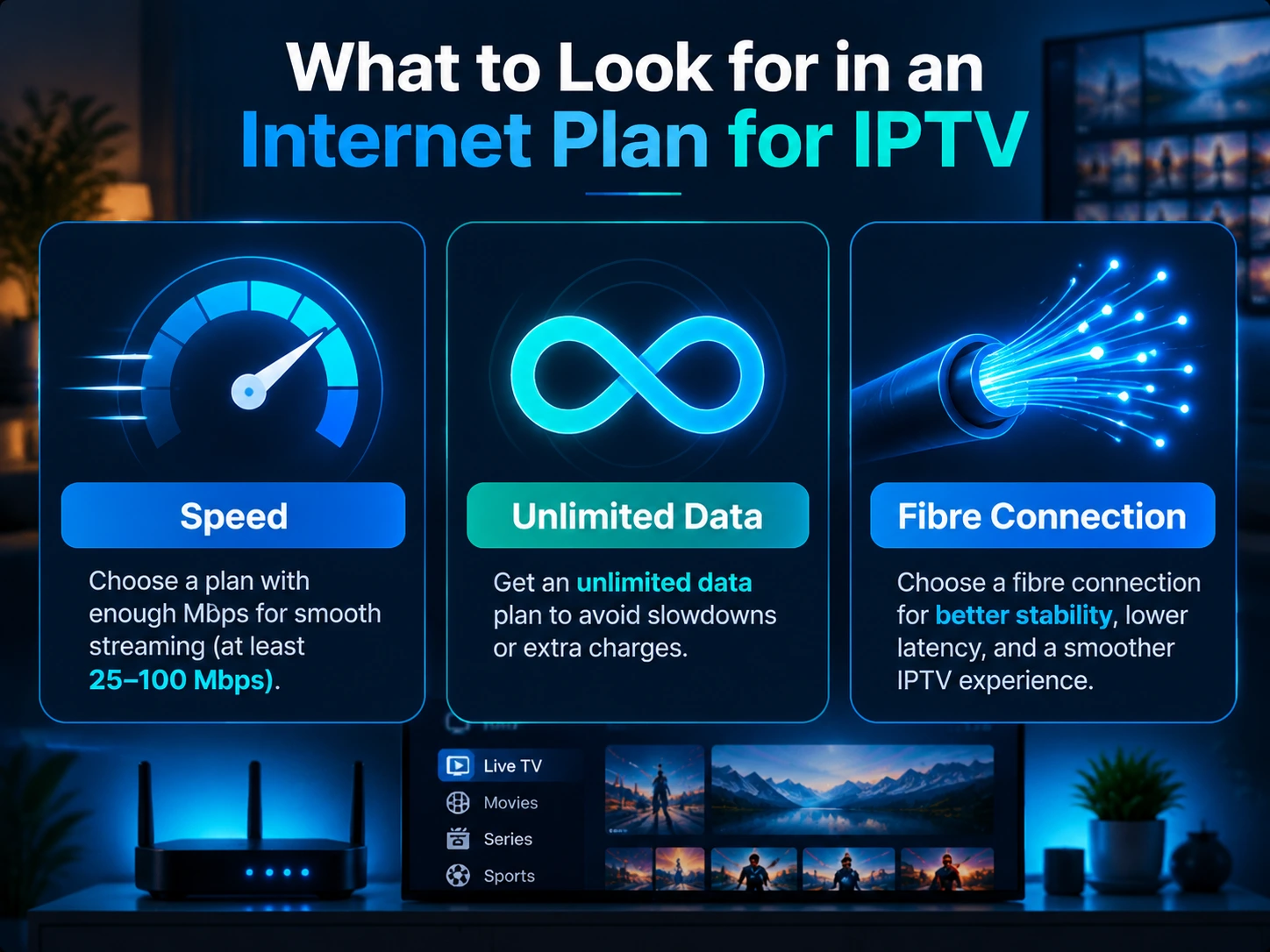
Four things matter far more than marketing headline speeds:
1. Unlimited data (the big one)
IPTV streams constantly while a TV is on, so it uses a lot of data. A plan with a strict monthly cap can hit its limit mid-month and leave you throttled or hit with overage fees. An unlimited-data plan is the single most important feature for IPTV.
2. Enough download speed for every TV at once
Plan for every screen that streams simultaneously, not just one. As a rule of thumb, budget about 15–25 Mbps per 4K stream and 5–10 Mbps per HD stream, then add headroom for phones, gaming, and downloads.
3. A stable connection type
Stability beats raw speed. Fibre is the gold standard for IPTV, followed by cable. DSL can work for one or two HD TVs, while fixed wireless and satellite internet are the least suited due to higher latency and data caps.
4. Decent upload and low latency
IPTV is mostly download, but a little upload headroom and low latency keep the connection responsive, especially during live sports in a busy household.
How Much Data Does IPTV Use?
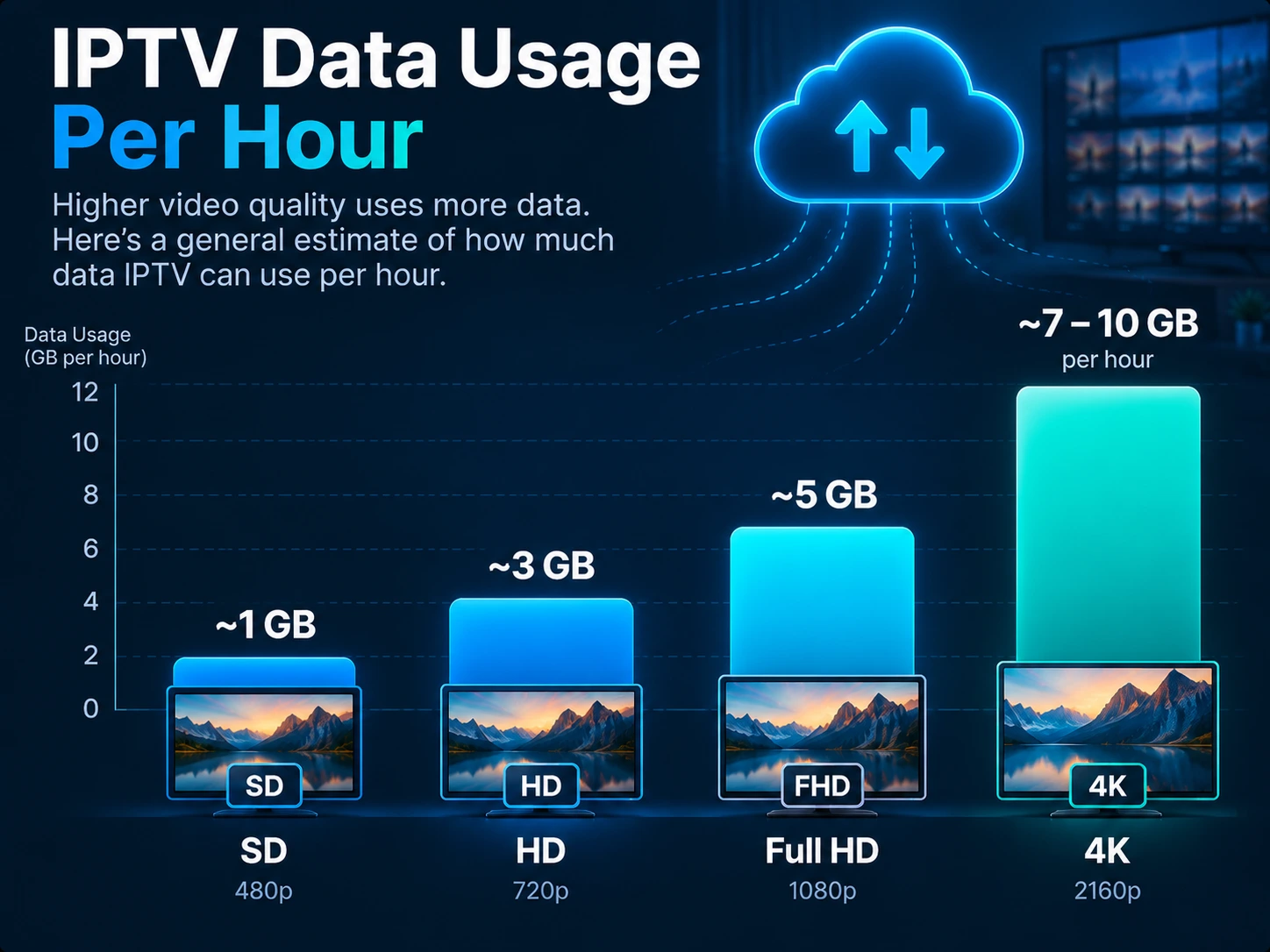
Data use depends on resolution. Rough guides per hour, per stream:
| Quality | Approx. data per hour |
|---|---|
| SD | ~0.5–0.7 GB |
| HD (1080p) | ~1.5–3 GB |
| 4K | ~5–7 GB |
A family watching several hours a day across multiple TVs can easily use hundreds of gigabytes – or more than a terabyte – per month. That is why a capped plan is a poor fit and unlimited data is essential.
Best Types of Internet Plans for IPTV in Canada (2026)
You have two broad options in Canada:
Major providers
The national and regional carriers – Bell (Fibe fibre), Rogers (Ignite cable), Telus (fibre, mainly in the West), and Videotron (Quebec) – offer fast fibre and cable plans that handle IPTV well. Choose a tier with unlimited data; some entry packages still cap it.
Independent and value ISPs
Independent providers such as TekSavvy, Oxio, EBOX, VMedia, and Start.ca often run on the same underlying fibre and cable networks but bundle unlimited data as standard and at lower prices. For IPTV households watching heavily, these plans are frequently the best value.
The sweet spot for most IPTV homes: a fibre or cable plan of at least 150–300 Mbps with unlimited data. Check availability at your address, since fibre coverage varies by neighbourhood. If an ISP interferes with streaming, see whether your provider can block IPTV.
Recommended Plan by Household Size
| Household | Suggested plan |
|---|---|
| 1 TV, casual viewing | 50–100 Mbps, unlimited data |
| Family, 2–3 TVs | 150–300 Mbps, unlimited data |
| Heavy 4K / many devices | 500 Mbps–1 Gbps, unlimited data |
Remember: a fast plan still buffers on a weak router. Pair your plan with a solid router for IPTV and, where possible, a wired connection to your main TV.
Plans and Setups to Avoid for IPTV
- Plans with hard data caps – IPTV will blow through them.
- Satellite internet – high latency and tight caps make it a poor match (note this is different from satellite TV).
- Fixed wireless in congested areas – can be inconsistent at peak times.
- The lowest DSL tiers – usually fine for one HD TV at most.
If you are already buffering, confirm it is the plan and not your setup with our buffering fix guide.
Frequently Asked Questions
What is the best internet plan for IPTV in Canada?
A fibre or cable plan of at least 150–300 Mbps with unlimited data suits most households. Heavy 4K homes should go higher; single-TV homes can go lower – but always choose unlimited data.
Do I need unlimited data for IPTV?
Effectively, yes. IPTV can use hundreds of gigabytes a month, so a capped plan risks overage fees or throttling.
Is fibre better than cable for IPTV?
Fibre is the most stable and is ideal, but a good unlimited cable plan also handles IPTV very well. Both beat DSL, fixed wireless, and satellite.
How much speed do I need for 4K IPTV?
Budget about 15–25 Mbps per simultaneous 4K stream, plus headroom for other devices.
Can I use any internet provider for IPTV?
Generally yes, as long as the plan has unlimited data and enough speed. A few ISPs interfere with streaming traffic, which a VPN can resolve.
The Bottom Line
For IPTV, pick an unlimited-data fibre or cable plan with enough speed for every TV in your home, and pair it with a capable router. Get that right and buffering becomes a non-issue. Want to test your connection on a real service? Start a free IPTV trial with IPTV Canada and see how your plan performs.